If you have a cat or dog and deal with allergies, you've probably heard someone say, "I'm allergic to pet hair."
It makes sense. You see hair on the couch, on your clothes, on the floor—and then the sneezing starts.
But there's an important distinction that every pet owner should understand:
Pet hair, dander, and allergens aren't the same thing.
In fact, the hair you see around your home often isn't what's directly causing your allergic reaction.
Understanding the difference can change how you approach grooming, cleaning, and managing allergies at home.
So, What Are You Actually Allergic To?
Pet allergies are generally triggered by proteins, not hair itself.
These allergenic proteins can come from different parts of an animal's body, including saliva, skin, urine, and other secretions.
With cats, one of the most important allergens is Fel d 1. Cats produce it naturally, and grooming spreads the protein across their skin and coat.
Dogs can produce several different allergens, including proteins found in saliva, dander, urine, and skin secretions.
This is why a dog or cat doesn't have to be particularly fluffy—or even particularly hairy—to cause allergy symptoms.
Then What Is Pet Hair?
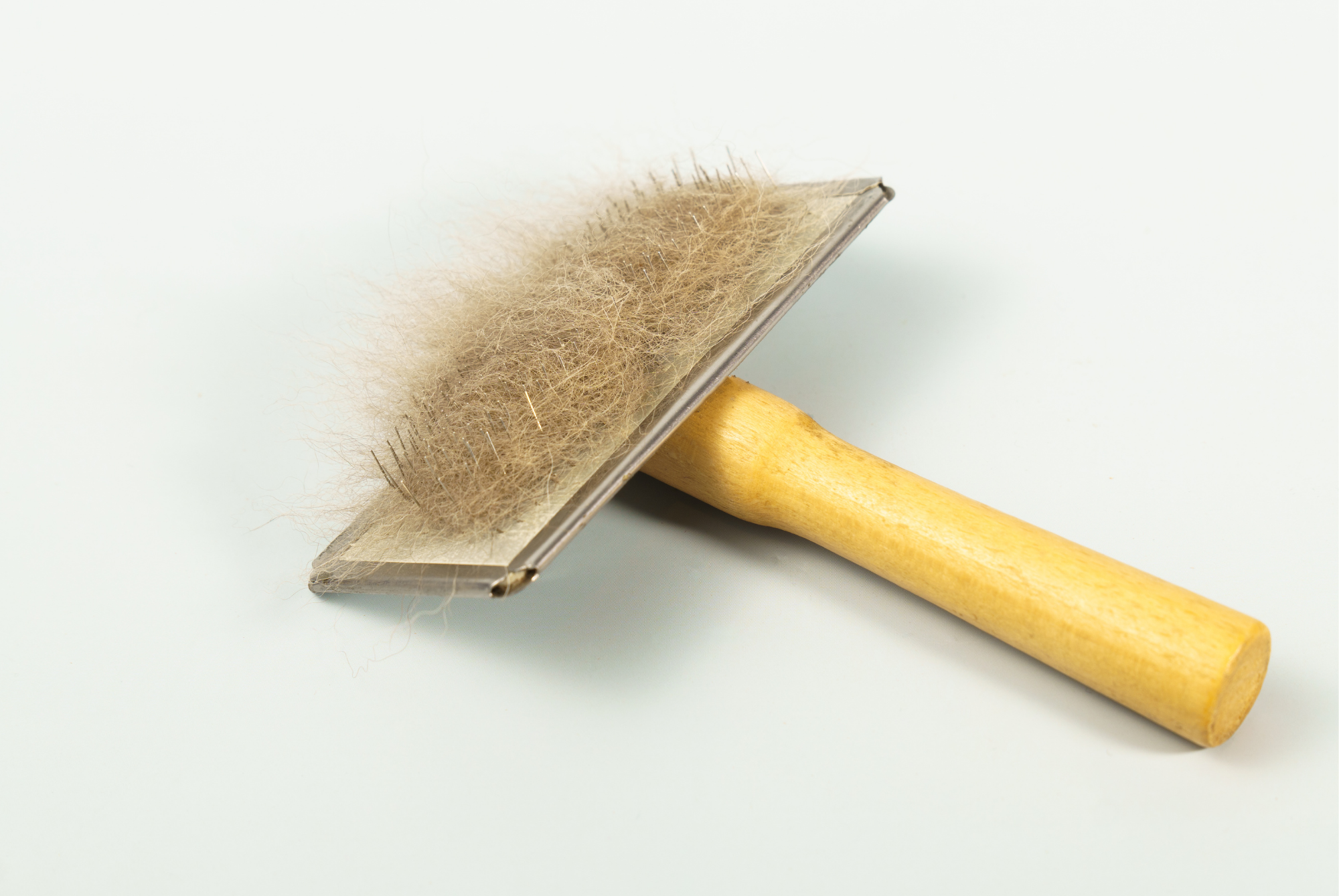
Pet hair is exactly what it sounds like: the strands of hair that grow from your pet's skin.
Hair itself isn't usually the allergen.
But that doesn't mean it is irrelevant.
Hair can act as a carrier for allergen-containing material.
Think about what happens when your cat grooms itself. Saliva containing allergenic proteins gets transferred onto the coat. When hair sheds, those proteins can travel with it.
The same basic principle applies to dogs. Allergenic proteins can end up on the coat and then move around the home as hair and other particles are shed.
So when you see a pile of pet hair on your couch, you're not necessarily looking at the allergy trigger itself.
You're looking at one potential vehicle for getting allergens around your home.
What Is Dander?
Dander is made up of tiny flakes of dead skin that animals naturally shed.
Unlike a large strand of fur, dander can be extremely small and easily become mixed with household dust or other particles.
And because dander can carry allergenic proteins, it can contribute to allergen exposure around the home.
This is one reason why simply picking up visible hair doesn't necessarily solve a pet allergy problem.
You might remove every visible strand from your couch and still have allergenic material on the upholstery, in dust, or on other surfaces.
Hair vs. Dander vs. Allergens
Here's the easiest way to think about it:
- Pet hair: The visible strands your pet sheds.
- Dander: Tiny flakes of dead skin shed by your pet.
- Allergens: Proteins capable of triggering an allergic immune response in a sensitive person.
They're connected, but they're not interchangeable.
Hair and dander can help move allergens through your environment, but the allergen is what your immune system is actually reacting to.
Why Does This Matter for Cat Owners?
Cat allergies are a particularly good example of why the distinction matters.
Cats constantly groom themselves. When they do, saliva containing Fel d 1 gets distributed across their coat.
From there, the allergen can move around the home on hair, dander, dust, clothing, furniture, bedding, and other surfaces.
Your cat doesn't have to be in the room
You can have a cat allergy even if you don't see much cat hair. It also explains why someone can experience symptoms in a room where their cat isn't currently present. The cat doesn't have to be sitting on the couch at that exact moment—the allergen may already be there.
What About Dogs?
Dogs are slightly more complicated because there isn't one single allergen responsible for every dog allergy.
Dogs produce multiple allergenic proteins, and these can be found in substances such as saliva, dander, urine, and skin secretions.
Their fur can then help distribute allergenic material around the home.
This is also why the idea of a completely "hypoallergenic" dog can be misleading.
A low-shedding coat may mean less loose hair in your environment, but it doesn't automatically mean the dog produces no allergens.
Does Less Hair Mean Fewer Allergies?
Not necessarily.
Reducing loose hair can certainly make your home easier to keep clean. Regular brushing can also remove loose hair and dander before they end up on your furniture or floors.
But less visible hair doesn't necessarily equal less allergen exposure.
That's because your pet can continue producing allergenic proteins regardless of how much hair you see around the house.
This is why grooming should be viewed as one part of an allergy-management routine, rather than a complete solution.
Where Do Pet Allergens End Up?
Once allergens leave your pet, they can move into the environment.
Common places include:
- Couches and upholstered furniture
- Carpets and rugs
- Bedding
- Pet beds
- Clothing
- Curtains
- Household dust
- Floors
- Other frequently touched surfaces
Soft surfaces deserve particular attention because they can collect hair, dander, dust, and allergen-containing particles.
What Can Pet Owners Actually Do?
Understanding the difference between hair and allergens doesn't mean you need to obsessively clean every inch of your home.
Instead, focus on reducing the amount of allergen that accumulates in the places where you and your pet spend the most time.
Groom regularly
Brushing can remove loose hair and dander before they spread throughout your home.
If you're allergic to your pet, consider having someone else do the brushing or doing it outside when possible.
Pay attention to soft surfaces
Your couch, bedding, rugs, and pet's bed can all collect allergen-containing material.
Regular cleaning can help reduce that buildup.
Wash your hands after handling your pet
This is especially useful before eating or touching your face.
Consider the bedroom
If you experience nighttime allergy symptoms, keeping your bedroom as a lower-allergen area as possible may be particularly useful.
Pet allergens can accumulate in bedding, carpets, and other bedroom surfaces.
Don't focus only on visible hair
A room can look spotless and still contain allergens.
That's perhaps the biggest takeaway from understanding the difference between hair, dander, and allergens.
The Bottom Line
Pet hair gets most of the blame because it's easy to see.
Allergens are different.
Hair is visible. Dander is microscopic. Allergens are the proteins that can trigger the immune response.
Hair and dander can help carry those allergens around your home, but removing every strand of fur isn't the same thing as eliminating allergen exposure.
For pet owners with allergies, that distinction matters.
Instead of asking, "How do I get rid of all the pet hair?" it can be more useful to ask:
"Where are allergens accumulating, and how can I reduce my exposure to them?"
That shift can help you build a more realistic approach to living comfortably with your pet.
Key Takeaways
- Pet allergies are triggered by proteins from saliva, skin, urine, and other secretions—not by hair itself.
- Hair and dander act as carriers, moving allergen-containing material around your home.
- Fel d 1 is a major cat allergen, and self-grooming spreads it across the coat.
- Dogs produce multiple allergenic proteins, so no breed is truly allergen-free.
- Less visible hair doesn't automatically mean less allergen exposure.
- Soft surfaces like couches, bedding, and pet beds deserve the most attention.